
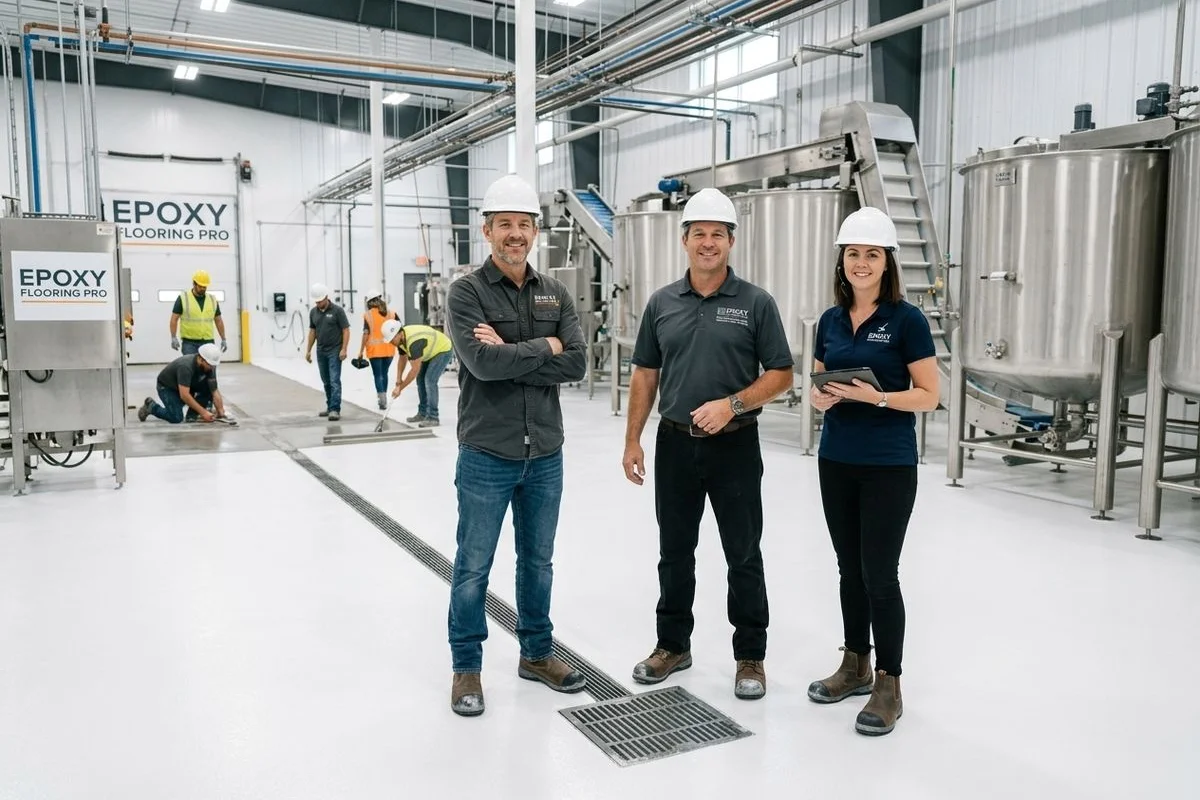
USDA & FDA Food-Grade Floor Systems in Grand Rapids, MI
HACCP-certified, USDA and FDA approved floor systems for Grand Rapids food processing, dairy production, breweries, and pharmaceutical facilities across West Michigan.
The Floor Is a Critical Control Point in Your Grand Rapids HACCP Plan
In food and beverage manufacturing, every surface adjacent to food production must be considered a potential contamination source. Your floor is one of the highest-risk surfaces — constantly exposed to raw materials, processing byproducts, cleaning chemicals, forklift traffic, and the cyclic wet-dry conditions that promote microbial growth.
Grand Rapids’ food and beverage sector is expanding rapidly. Fairlife’s $650M dairy facility expansion in Coopersville, Founders Brewing’s 192,000 sq ft warehouse and production operation, regional meat processors across Kent County, and dozens of bakeries and packaged food manufacturers all require floor systems that satisfy HACCP, USDA, and FDA requirements without compromise.
Epoxy Flooring Pro has specialized in food and beverage facility floors for over fifteen years. Our crews work in USDA-inspected plants, FDA-regulated production areas, pharmaceutical facilities on Medical Mile, commercial bakeries, and institutional kitchens across West Michigan. We understand the regulatory landscape, the performance requirements, and the installation discipline that food-safe flooring demands.
Regulatory Framework for West Michigan Food Facilities
USDA Acceptance for Federally Inspected Facilities
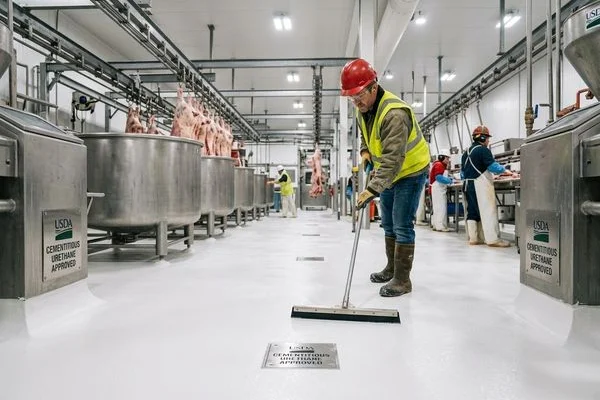
Meat and poultry processing plants operating under USDA/FSIS inspection are subject to the strictest flooring requirements. We work exclusively with coating systems holding current USDA acceptance documentation and provide copies for your regulatory file.
FDA 21 CFR Compliance
For FDA-regulated facilities — including the beverage, dietary supplement, and packaged food operations throughout Grand Rapids and Kent County — the applicable standard is 21 CFR. All systems we specify comply with relevant sections, and we provide full regulatory documentation from coating manufacturers.
Third-Party Food Safety Certifications
Many West Michigan food manufacturers operate under BRC, SQF, FSSC 22000, or AIB standards. We are familiar with floor-related clauses of these standards and specify systems that satisfy documentation and performance requirements auditors evaluate.
System Selection by Zone: Not One Floor for the Whole Facility
The most common mistake in Grand Rapids food facility specification is applying a single system everywhere. A food processing plant may need three or four distinct floor systems:
Wet Processing Zones (Primary Production)
Recommended: Urethane cement, 3/8” to 1/2” thick with broadcast aggregate
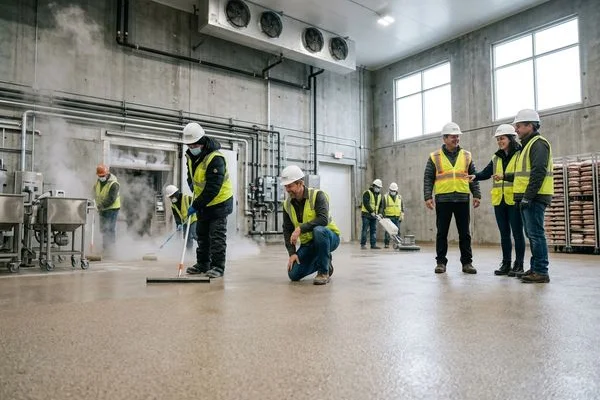
These areas are subjected to the most demanding conditions — daily high-pressure hot water or steam cleaning, significant thermal cycling, continuous wet conditions, and exposure to organic acids, fats, and sanitizing chemicals. Only urethane cement provides the thermal shock resistance these West Michigan food processing environments require.
Refrigerated and Chilled Areas
Recommended: Moisture-tolerant urethane cement or low-temperature epoxy mortar
Grand Rapids’ cold storage and frozen food operations — including the dairy processors in Coopersville and cold chain distribution centers in Kentwood — present dual challenges: very low operating temperatures and significant condensation during defrost cycles.
Dry Production and Packaging Areas
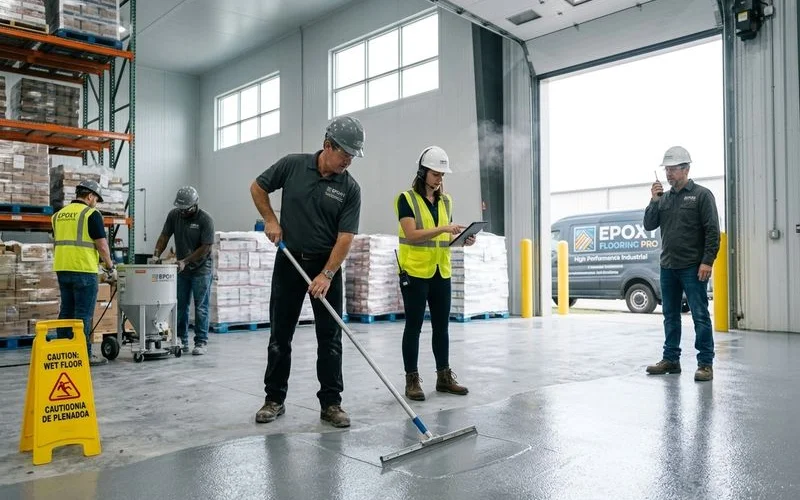
Recommended: 100% solids epoxy or polished concrete with guard
Where thermal shock and organic acids are not present, 100% solids epoxy provides excellent durability at lower cost than urethane cement. These areas benefit from smooth, seamless surfaces and bright reflective colors.
Loading Docks and Receiving Areas
Recommended: Heavy-duty epoxy mortar or urethane cement with anti-slip aggregate
Receiving areas at Grand Rapids food facilities experience extreme point loading from pallet jacks, significant temperature variation from Michigan’s outdoor exposure, and moisture from seasonal conditions. Impact-resistant mortar systems with adequate thickness are essential.
The Coved Skirting Detail: Where Most Food Facility Floors Fail
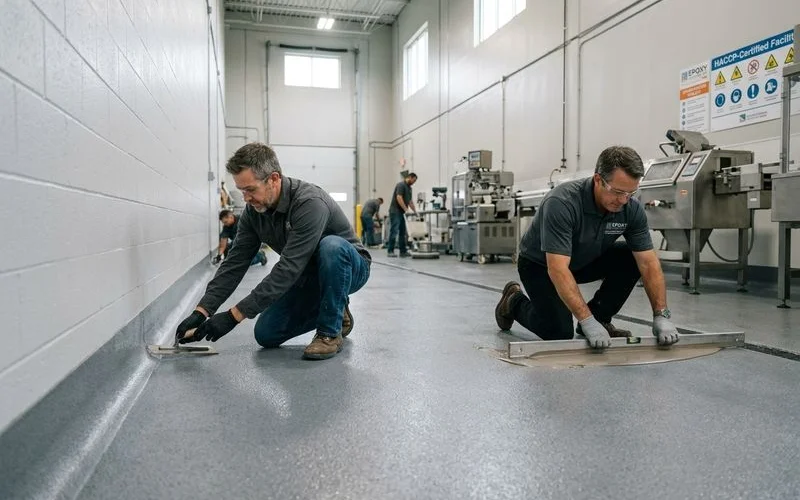
The floor-to-wall transition is the highest-risk location for harboring point creation. A conventional square-profile junction creates an inaccessible ledge where cleaning tools cannot reach, organic material accumulates, and microorganisms colonize.
Coved skirting — a radiused fillet transition sloping the floor surface up the wall face to 4–6 inches — eliminates this problem. The radius (typically 50mm) allows cleaning tools to reach and clean the entire transition.
Our crews use factory-formed cove tools to ensure consistent radius and height. We have seen many West Michigan food facility floors fail at coved skirting because the cove was applied by hand without proper tooling — a shortcut that leads to audit findings and harboring points.
Slip Resistance in West Michigan Food Processing
Food processing environments with wet floors and organic material present significant slip hazard. OSHA requires that walking surfaces be safe; HACCP requires cleanability. Both must be satisfied simultaneously.
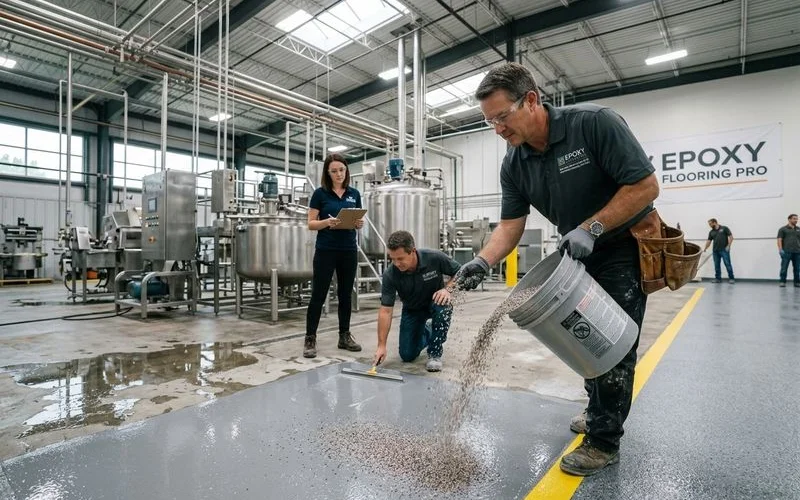
We achieve this through broadcast aggregate systems — aluminum oxide or silicon carbide aggregate broadcast into wet floor coating provides texture while maintaining a closed, cleanable surface — and anti-slip topcoats for specific high-risk zones like drain channels, ramps, and transition areas.
Sanitation Compatibility for Grand Rapids Food Operations
The sanitizing chemicals used in West Michigan food facilities — quaternary ammonium, peroxyacetic acid, sodium hypochlorite, caustic soda, and phosphoric acid — are highly aggressive. We obtain and review chemical resistance data for your specific sanitation chemicals before specifying any system.
For facilities with particularly demanding chemical exposure — high-concentration CIP systems common in dairy processing — we specify novolac epoxy or vinyl ester topcoats that offer significantly higher chemical resistance than standard epoxy.
Contact our food facility flooring specialists to schedule a zone-by-zone assessment of your Grand Rapids area facility and receive a HACCP-aligned floor specification with full regulatory documentation.
What's Included
Our Food & Beverage Flooring Installation Process
Facility Assessment and Compliance Review
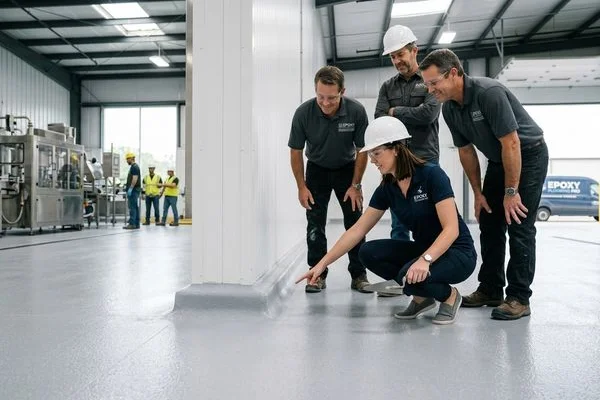
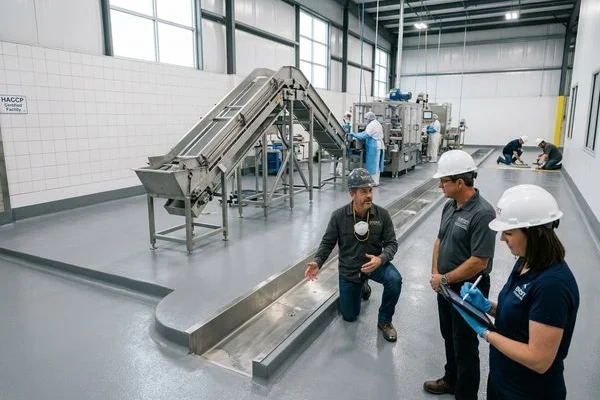
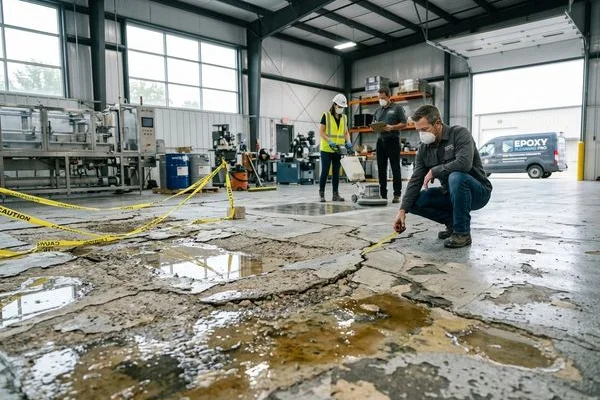
Our project team conducts a detailed facility assessment covering zone classification (wet/dry, processing/non-processing), drain locations and flow patterns, temperature exposure ranges including steam cleaning and CIP cycles, chemical exposure profile (sanitizers, acids, fats), and existing floor condition. We document regulatory requirements applicable to your facility type before specifying any system.
Zone-Specific System Specification
Food facilities rarely have uniform conditions throughout. Wet processing areas, refrigerated zones, dry storage, receiving docks, and employee welfare areas each require different system properties. We develop a zone-by-zone specification that applies the appropriate product in each area — urethane cement in steam-cleaned wet zones, 100% solids epoxy in dry production areas, anti-slip broadcast systems in high-traffic pedestrian zones.
HACCP-Protocol Surface Preparation
All surface preparation in food production facilities follows HACCP-aligned protocols. Equipment is cleaned between operations to prevent cross-contamination. Shot blasting equipment is containerized to control media. All chemical prep materials are food-safe rated. Substrate moisture and pH are documented. The preparation area is kept isolated from active food production zones throughout the project.
Drain and Cove Installation
Drains are properly integrated into the floor system with sloped transitions that direct water to drains without pooling. Coved skirting at all wall, column, and equipment base junctions is installed using the same floor system material, creating a fully seamless, cleanable transition that eliminates the harboring areas that grow microorganisms in conventional square-profile floor-wall junctions.
Primary System Application
The primary floor system is applied following manufacturer protocols for temperature, humidity, and pot life. Food-grade pigments and antimicrobial additives are blended at factory-verified concentrations. Film thickness is monitored at each stage and documented. All application equipment is maintained clean and free of contaminants throughout the installation.
Compliance Documentation and Inspection
Upon completion, we provide a full compliance package including product data sheets confirming USDA/FDA approval status, application records with lot numbers and batch quantities, photographic documentation of all stages, moisture testing records, and inspection confirmation. This documentation supports your HACCP audit records and facility certification requirements.
Why Choose Epoxy Flooring Pro
Food Safety Protocol Training
Our crews who work in food and pharmaceutical facilities complete food safety awareness training before entering any food-contact area. We understand HACCP principles, GMP requirements, and how installation activities must be managed to avoid contaminating food production environments.
Approved Product Inventory
We maintain an inventory of USDA/FDA-approved coating systems from multiple manufacturers, ensuring product availability and the ability to match the right system to your specific West Michigan facility.
Cove and Drain Expertise
Coved skirting and drain integration are the highest-failure-risk details in food facility flooring. Our crews use factory-formed cove tools to ensure consistent radius and height throughout every installation.
Thermal Shock Testing
We only specify systems with documented thermal shock resistance tested to the actual temperature ranges in your facility — critical for Grand Rapids area dairy processors and frozen food operations.
Experience Across Food Sectors
We have installed food-grade floor systems in meat processing, dairy production, beverage manufacturing, commercial bakeries, pharmaceutical production, and institutional kitchens across West Michigan.
Project Gallery
Before & After
Before
After
What Our Clients Say
"Our USDA-inspected meat processing plant in Kent County had failed two previous floor installations. Epoxy Flooring Pro understood our compliance requirements immediately, specified urethane cement with proper coved skirting, and completed installation during our scheduled shutdown. We passed the USDA follow-up inspection with zero floor findings."
"The coved skirting detail is everything in a food facility. Epoxy Flooring Pro's crew was meticulous about every cove transition at our Grand Rapids bakery. Our SQF auditor specifically commented on the floor quality during our last audit. Worth every dollar."
"We needed a floor system for our Coopersville dairy plant that could handle daily steam cleaning, forklift traffic, and dairy product contact. The thermal shock-resistant urethane cement has held up for 20 months of continuous production. The non-porous surface cleans in minutes."
Frequently Asked Questions
What food-grade floor certifications do Grand Rapids food processors need?
Why is urethane cement preferred for Grand Rapids food processing plants?
Can food-grade floors be installed while our Grand Rapids plant is in partial operation?
How do you prevent bacteria harboring at floor-to-drain transitions?
What antimicrobial options are available for Grand Rapids food facilities?
Get a Free Estimate for Food & Beverage Flooring
Our project managers are ready to assess your facility and recommend the optimal food & beverage flooring solution.