
Decorative Quartz, Metallic Epoxy & Commercial Floors in Grand Rapids
Decorative quartz, metallic epoxy, flake coatings, and terrazzo restoration for Grand Rapids showrooms, restaurants, healthcare facilities, and corporate spaces.
Where Industrial Performance Meets Architectural Vision in Grand Rapids
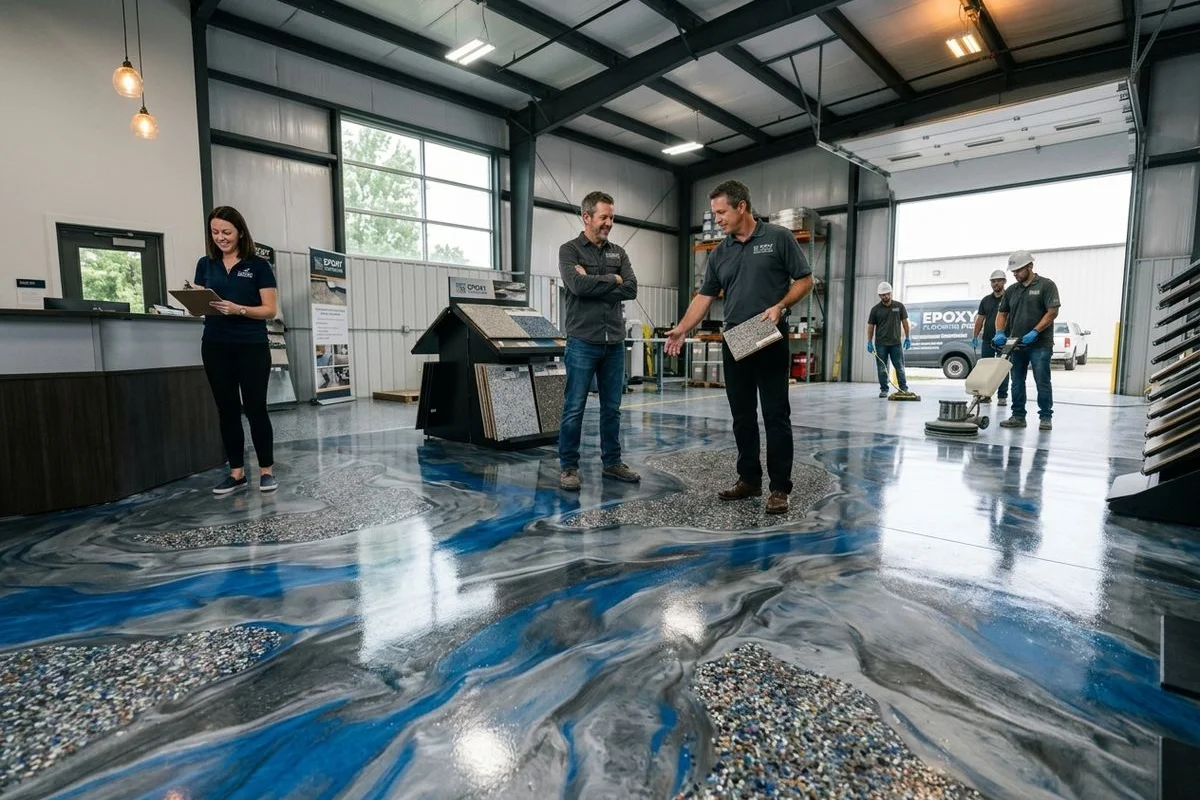
There is a persistent misconception that durable floors have to be utilitarian — gray, flat, and functional at the expense of appearance. In a city that calls itself the Furniture City and takes design seriously, that compromise is unnecessary. The decorative flooring systems installed by Epoxy Flooring Pro prove otherwise. Our metallic epoxy installations turn concrete slabs into three-dimensional visual features in Grand Rapids showrooms and lobbies. Our decorative quartz systems give Wealthy Street restaurant kitchens and Medical Mile healthcare corridors the slip-resistant, chemical-resistant surface they require while delivering the polished aesthetic that guests and patients notice.
Every decorative system we install uses the same high-performance resins as our industrial epoxy floors. The difference is in the color, the texture, and the finish — not in the underlying quality of the chemistry or the installation process.
Metallic Epoxy: The Signature Decorative System
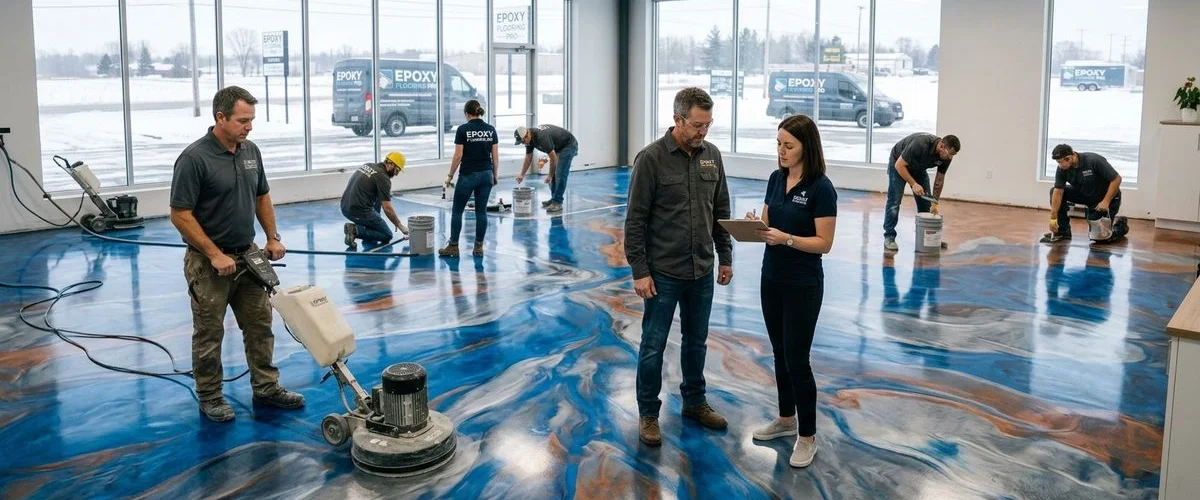
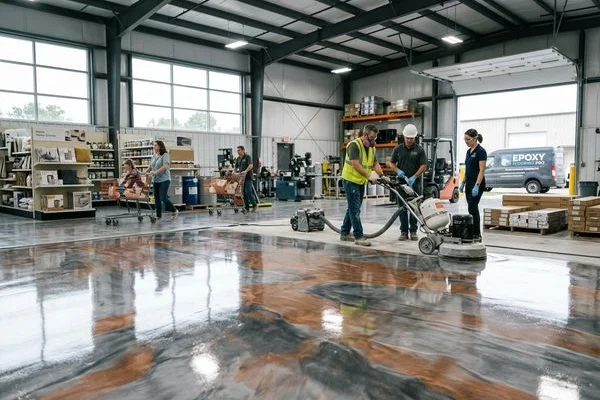
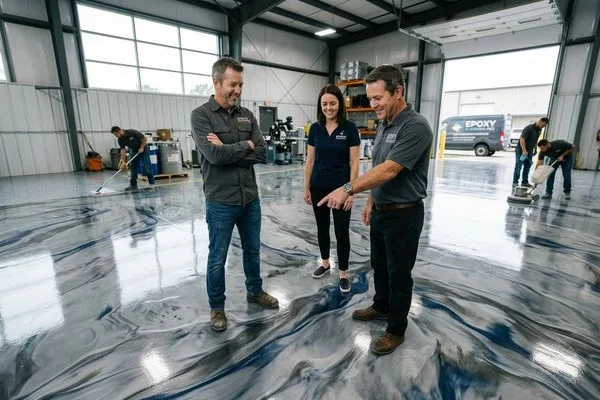
Metallic epoxy floors have become the signature design element in Grand Rapids’ high-end furniture showrooms, boutique hotels downtown, East Fulton restaurant bars, corporate lobbies, and residential spaces where the floor is meant to be noticed. No two metallic epoxy floors are identical — the installer’s hand creates movement, depth, and pattern that cannot be replicated.
How Metallic Epoxy Works
The metallic effect comes from combining standard epoxy resin with fine metallic powder pigments — typically mica or aluminum-based — that float and orient themselves as the material is spread and manipulated. By using multiple pigment colors, varying spreading techniques, and introducing targeted air movement, our installers create the characteristic swirling, cellular, and liquid-metal effects that define the system.
The metallic layer is applied over a primed and prepared concrete surface. After curing, a UV-stable aliphatic polyurethane topcoat is applied. This final layer is critical: aromatic epoxy topcoats will yellow significantly within months in any space with natural light. Grand Rapids’ renovated downtown buildings and modern showrooms with large window walls make UV stability non-negotiable.
Design Consultation Process
Before we pour a single square foot of metallic epoxy, we work through a design consultation that includes color selection, pattern direction, and sample board preparation. You approve the look before we install it. We can incorporate multiple colors, divide areas with zinc or brass strips, and blend pigments to match specific brand palettes — important for Grand Rapids’ design-conscious furniture and retail brands.
Decorative Quartz Broadcast Systems
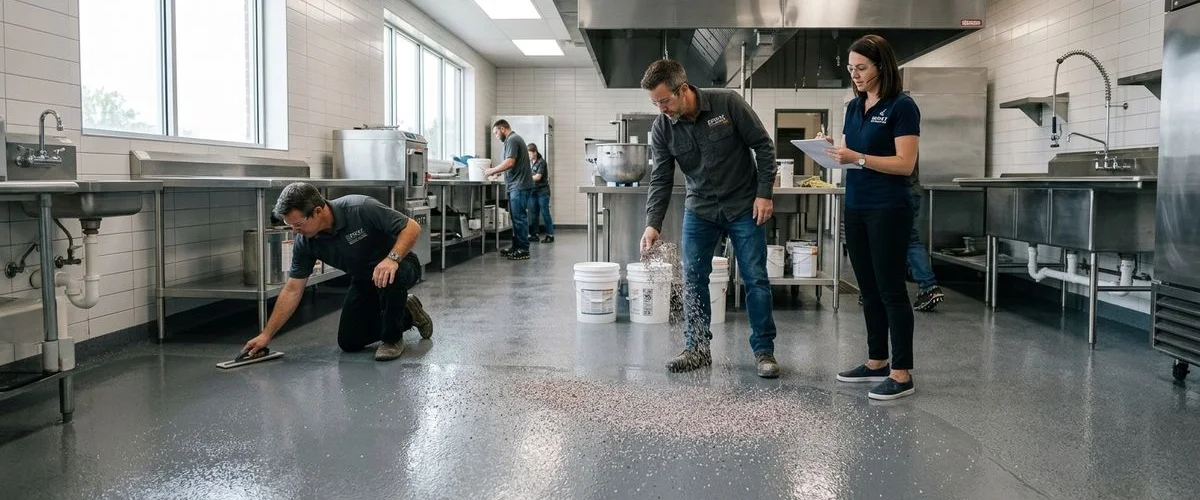
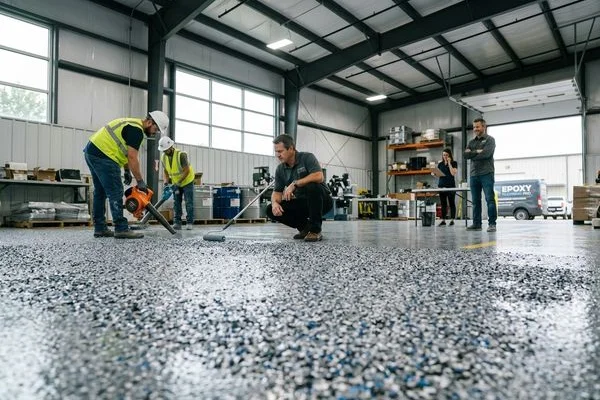
Decorative quartz systems combine brilliant color with genuine functional performance. A base coat of pigmented epoxy is applied and immediately broadcast with colored quartz aggregate. After curing, excess quartz is removed, the surface is squeegeed and rolled with a clear intermediate coat, and a polyurethane topcoat completes the system.
The result is a textured, slip-resistant surface with consistent color distribution and excellent chemical resistance. Decorative quartz is the system of choice for:
- Restaurant kitchens and dining areas: Grand Rapids’ growing food scene on Wealthy Street, Bridge Street, and throughout the downtown core demands surfaces that meet health department cleanliness requirements while providing slip resistance in wet food prep areas.
- Commercial restrooms and locker rooms: Seamless, grout-free surface resists mold and bacteria. Drain transitions are coated without interruption — particularly valuable in Grand Rapids’ high-humidity environment.
- Healthcare corridors and patient areas: Medical Mile’s expansion means more healthcare environments need easy-clean, chemical-resistant surfaces that withstand aggressive disinfection protocols while maintaining professional aesthetics.
- Retail and hospitality environments: Quartz systems offer hundreds of color combinations and can be installed in custom patterns to match the design standards of Grand Rapids’ renovated commercial spaces.
Vinyl Flake (Chip) Systems
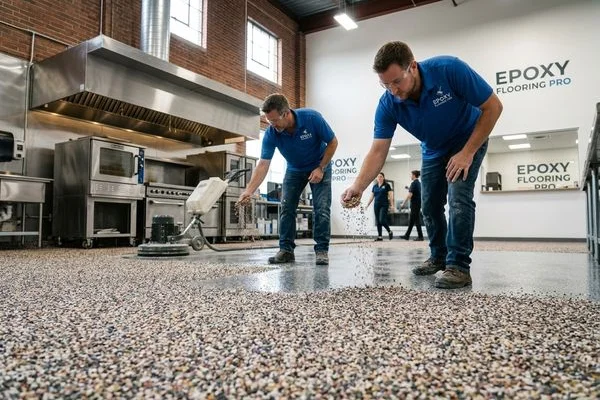
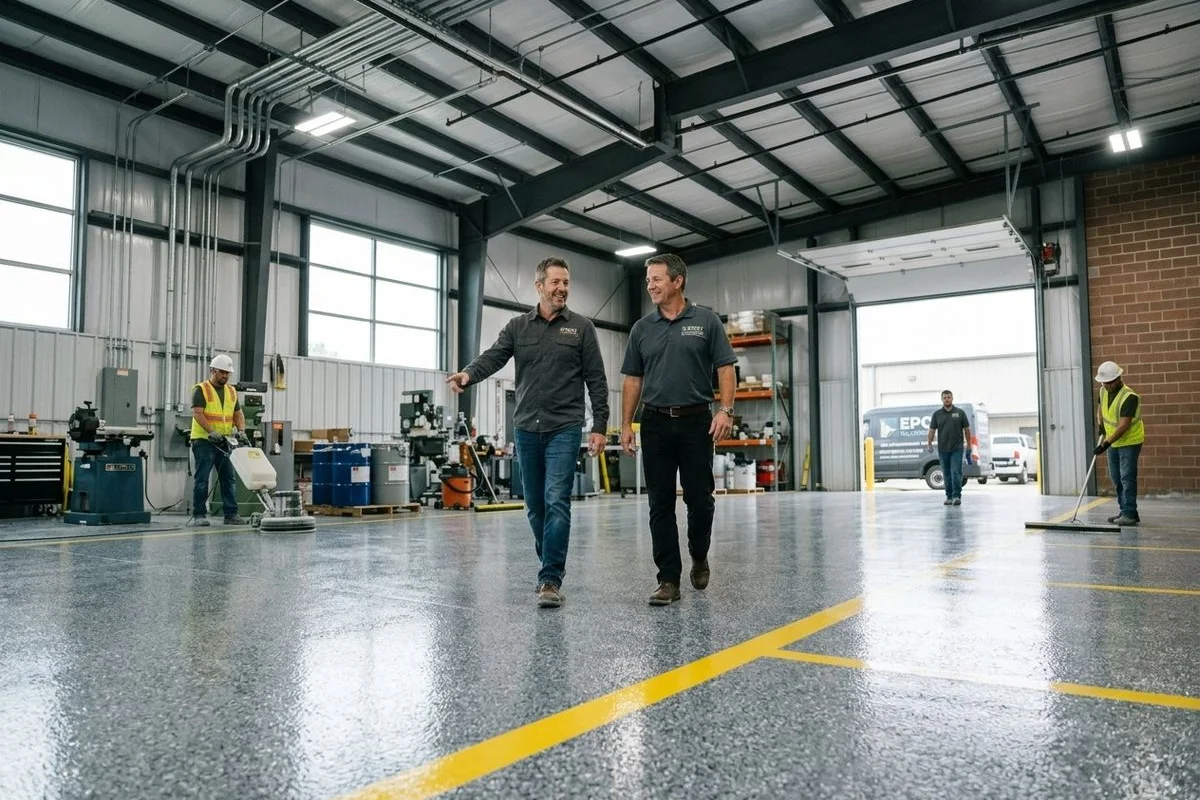
Vinyl flake systems — also called chip, flake, or broadcast systems — provide a speckled granite-like appearance that conceals dirt and scuffs well in high-traffic environments. Like quartz systems, vinyl flake is broadcast to rejection into a wet base coat, encapsulated with a clear intermediate coat, and topcoated with polyurethane.
The flake color palette is extensive — hundreds of pre-blended chip combinations are available, or we can specify a custom blend. Popular applications in the Grand Rapids area include auto dealership service drives along 28th Street, office environments in the Medical Mile district, commercial garages, and school corridors throughout Kent County.
Terrazzo Restoration
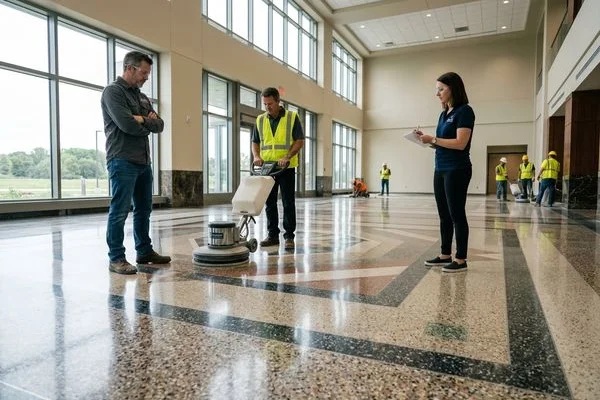
Original terrazzo floors — poured in place in the mid-20th century — represent irreplaceable craftsmanship and architectural character. Grand Rapids has exceptional examples in its downtown heritage buildings, including structures along Monroe Center, Campau Square, and the older commercial blocks that predate the city’s modern renaissance. When they deteriorate through decades of neglect, improper stripping chemicals, or physical damage, the instinct is often to cover them. Epoxy Flooring Pro’s approach is to restore them.
Our terrazzo restoration process begins with assessment: we identify the extent of surface wear, crack depth, divider strip condition, and any areas of delamination. Restoration typically involves:
- Diamond grinding to remove surface contamination, worn sealer, and expose fresh aggregate
- Crack repair using color-matched epoxy or cementitious filler
- Divider strip repair — bent or missing brass, zinc, or aluminum strips are straightened or replaced
- Progressive polishing from coarse through fine grits to develop shine
- Penetrating sealer application to protect the restored surface without changing the matte-to-satin terrazzo character
The result preserves the original investment and the building’s architectural heritage — at a fraction of the cost of replacement.
Grand Rapids Commercial Flooring Applications
Our decorative commercial flooring portfolio spans Grand Rapids’ commercial sectors: furniture showrooms and design studios that define the Furniture City legacy, the growing restaurant scene on Wealthy Street and Bridge Street, Medical Mile healthcare facilities, corporate campuses in the I-96 corridor, boutique hotels in the revitalized downtown, retail environments, and educational buildings at GVSU, Aquinas, and Calvin University.
Contact Epoxy Flooring Pro for a design consultation. We will help you select the right decorative system for your Grand Rapids space, prepare sample boards for your approval, and deliver a finished floor that performs for decades.
What's Included
Our Decorative Systems Installation Process
Design Consultation
We review your brand colors, design vision, and space requirements. Sample boards are prepared for metallic and quartz systems so you can see the finish before we install.
Concrete Assessment & Preparation
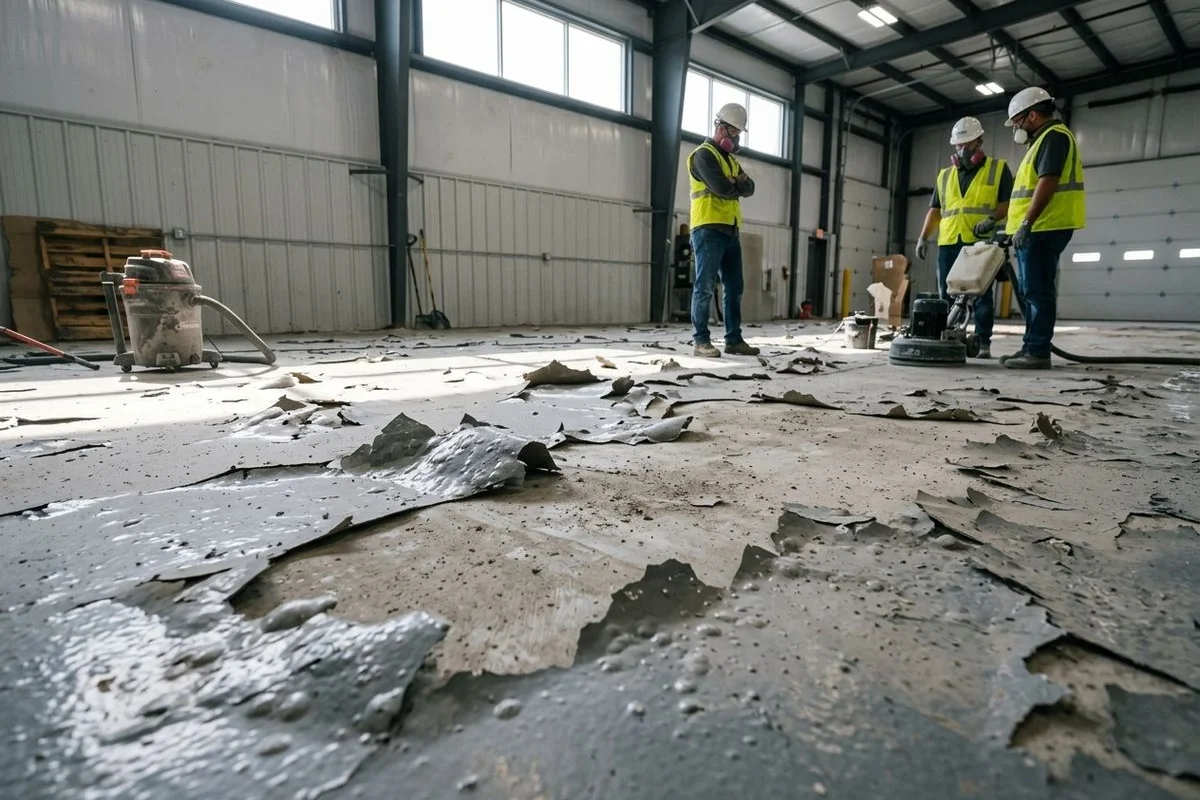
Diamond grinding removes existing coatings, laitance, and surface contaminants. Cracks and joints are repaired. Concrete must be clean, structurally sound, and at the correct moisture level.
Primer Application
Two-component epoxy primer seals the concrete surface, provides adhesion for the decorative system, and prevents moisture vapor from affecting the topcoat.
Decorative System Installation
Metallic pigments, quartz aggregate, or vinyl flake are applied according to your selected design. Metallic systems involve multiple pours, spreading techniques, and blending for the desired depth effect.
Broadcast & Encapsulation (where applicable)
For quartz and flake systems, aggregate is broadcast to rejection into the wet base coat, then encapsulated with a clear intermediate coat to lock particles in place and create a uniform substrate for the topcoat.
UV-Stable Topcoat
An aliphatic polyurethane or aliphatic epoxy topcoat is applied over all decorative systems for UV stability, abrasion resistance, and easy cleaning. Gloss level is selected based on your preference and the space requirements.
Why Choose Epoxy Flooring Pro
Custom Design Capability
We do not work from a catalog of stock patterns. Every metallic epoxy floor is blended and poured on-site by hand, creating a unique surface. Quartz and flake color combinations are customized to your brand or the design direction of your Grand Rapids space.
Commercial-Grade Durability
Our decorative systems use the same high-performance resins as our industrial floors — they are not residential garage floor systems applied in a commercial setting. They withstand Furniture City showroom traffic, restaurant cleaning chemicals, and healthcare sanitation protocols.
UV-Stable Finishes
We specify aliphatic polyurethane topcoats on all decorative work. These maintain color and gloss without the yellowing that plagues aromatic epoxy finishes in Grand Rapids spaces with natural light exposure from the abundant window glass in renovated downtown buildings.
Terrazzo Expertise
Grand Rapids has outstanding mid-century architecture with original terrazzo — heritage buildings downtown, Meyer May House area, and older commercial properties. We restore these irreplaceable floors rather than covering them.
Project Gallery

Before & After
Before
After
What Our Clients Say
"The metallic epoxy floor in our East Fulton showroom has become a conversation piece. Customers comment on it constantly — fitting for the Furniture City. More importantly, it has held up flawlessly through two years of daily showroom traffic. Epoxy Flooring Pro delivered exactly what they promised."
"We needed decorative quartz flooring for our Wealthy Street restaurant — something that looked great, handled spills, and met our health department requirements. Epoxy Flooring Pro specified the right system, matched our brand colors, and had us back open in 48 hours."
"The original terrazzo in our 1950s Monroe Center building was in terrible shape. Epoxy Flooring Pro restored it beautifully — ground, regrouted the divider strips, and sealed it. It looks exactly as it should, and the character of downtown Grand Rapids architecture is preserved."
Frequently Asked Questions
How is a metallic epoxy floor created?
Is decorative quartz slip-resistant?
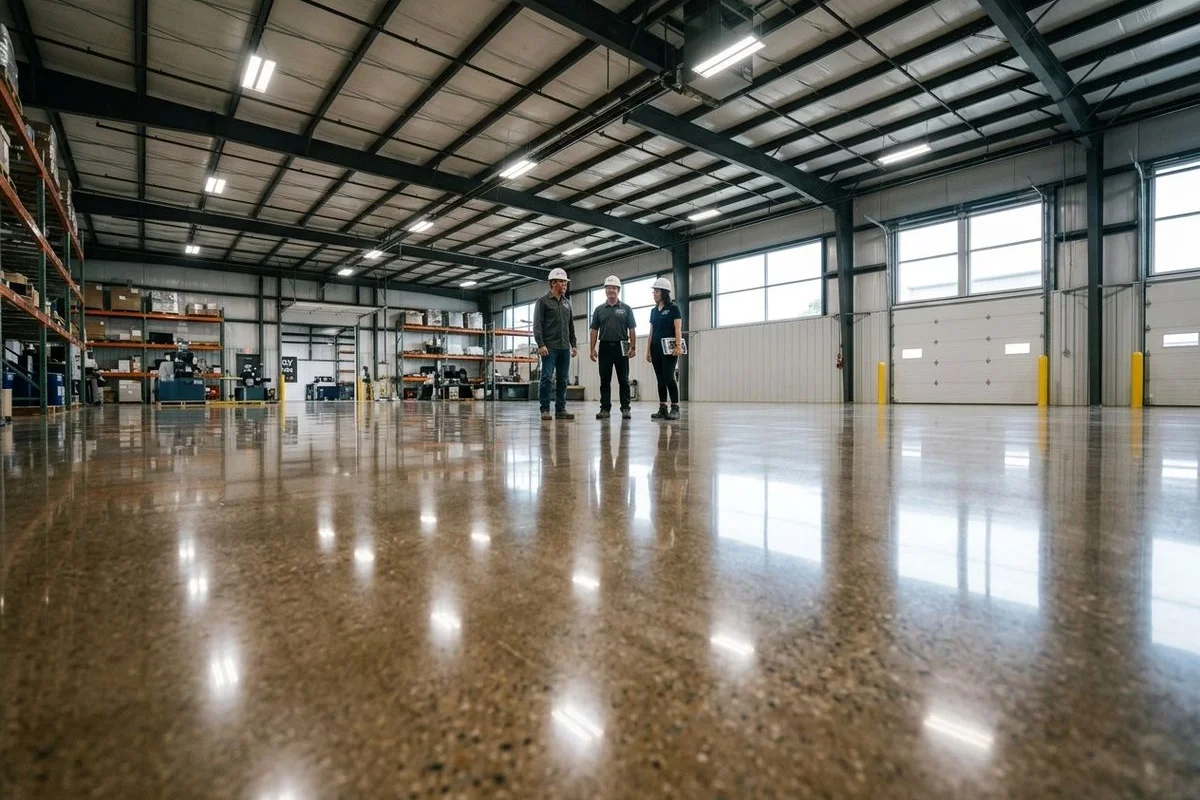
How does decorative epoxy compare to polished concrete aesthetically?
Can you match our brand colors in a decorative quartz or flake system?
Can terrazzo be restored if it has deep cracks or missing chips?
How long does a decorative epoxy floor last in a commercial setting?
Get a Free Estimate for Decorative Systems
Our project managers are ready to assess your facility and recommend the optimal decorative systems solution.