
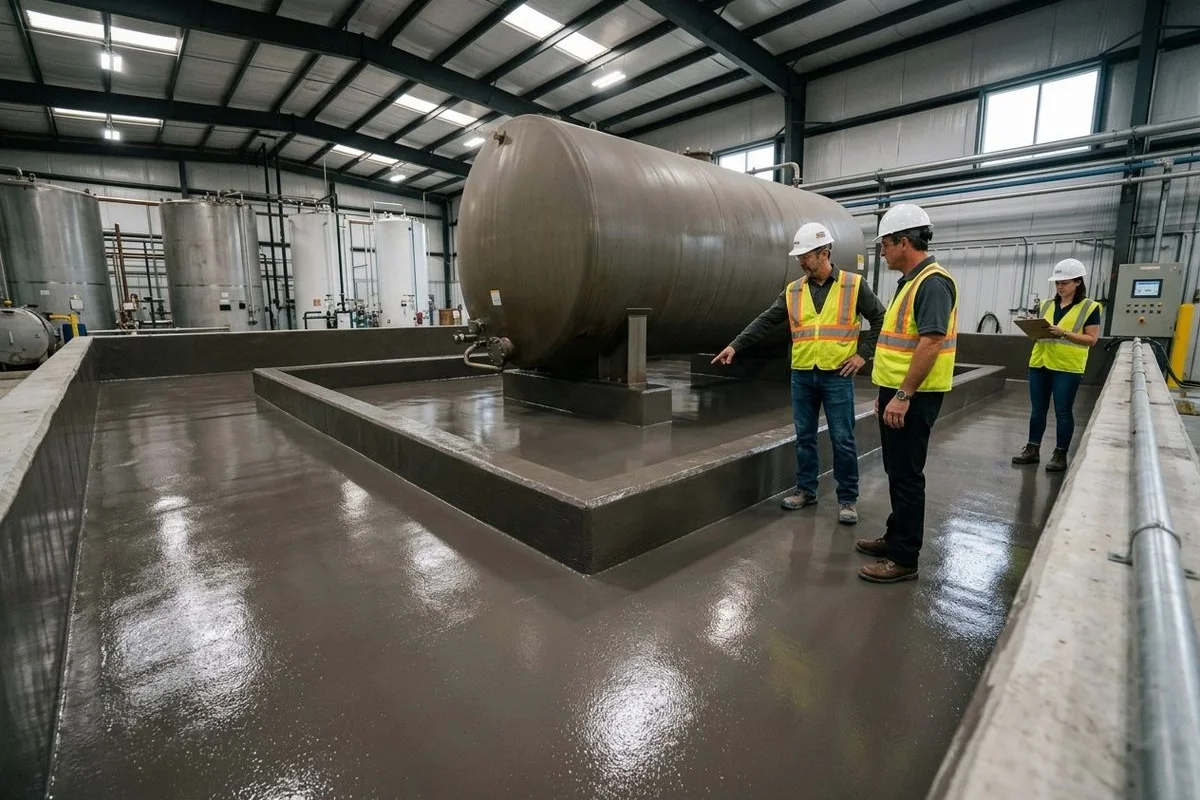
Containment Coatings & Tank Linings in Grand Rapids, MI
Secondary containment linings, tank coatings, and sump linings using novolac epoxy and vinyl ester systems for Grand Rapids chemical storage and hazardous material areas.
Secondary Containment: Protecting Grand Rapids and West Michigan’s Environment
Secondary containment systems exist because primary containment can and does fail. Grand Rapids area chemical manufacturers, pharmaceutical facilities along Medical Mile, and industrial operations throughout Kent County handle chemicals that, if released, can contaminate soil, groundwater, and storm drains — triggering EPA enforcement actions and significant remediation costs.
EPA SPCC regulations mandate secondary containment for above-ground chemical and petroleum storage. Meeting this standard requires a protective lining system that maintains chemical impermeability for the service life of the storage system — not just a concrete berm.
Epoxy Flooring Pro installs secondary containment linings, tank coatings, and waterproofing systems for chemical storage, petroleum products, and industrial process applications across Grand Rapids, Walker, Kentwood, and the broader West Michigan region.
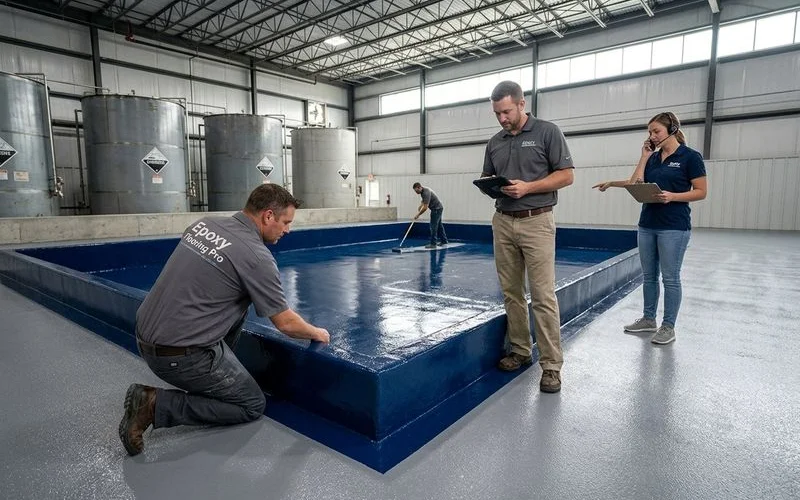
Coating Chemistry for West Michigan Containment Applications
Standard Bisphenol-A Epoxy
Appropriate for containment of aqueous solutions, dilute chemical spills, and petroleum products at low temperatures. NOT adequate for concentrated solvents, concentrated acids, or elevated service temperatures.
Novolac Epoxy
Higher cross-link density provides resistance to aromatic solvents, concentrated sulfuric acid (up to 70%), and elevated temperatures. Essential for Grand Rapids chemical manufacturing operations — Haviland Enterprises’ 620,000 sq ft chemical manufacturing campus and Americhem’s compounds plant both handle chemicals that exceed standard epoxy’s capabilities.
Vinyl Ester Linings
The highest chemical resistance tier — fuming acids, strong oxidizers, bleach at concentrated levels, and mixed chemical exposure. Required for the most demanding containment environments in West Michigan’s chemical processing sector.
Containment Failure Points: Lessons from West Michigan Projects
Construction Joints and Cracks
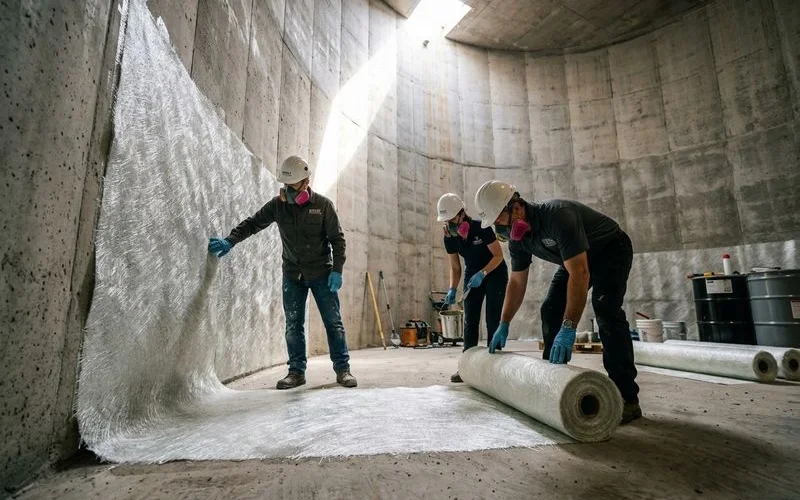
Concrete moves and develops cracks throughout its service life — accelerated by Grand Rapids’ freeze-thaw cycling. Construction joints and control joints create high stress in the coating above. Our approach: fiberglass woven mat embedded in the first coat at all joint locations provides crack-bridging capacity.
Floor-to-Wall Transitions
The cove at the containment floor-wall junction cracks under thermal cycling if the coating bridges the corner without a formed radius. We form proper radius coves and embed fiberglass mat.
Penetrations
Pipes and conduits penetrating containment structures are the highest-risk bypass paths. We install appropriate penetration collars and flashings, then spark-test with particular attention.
Waterproofing for West Michigan Below-Grade Structures
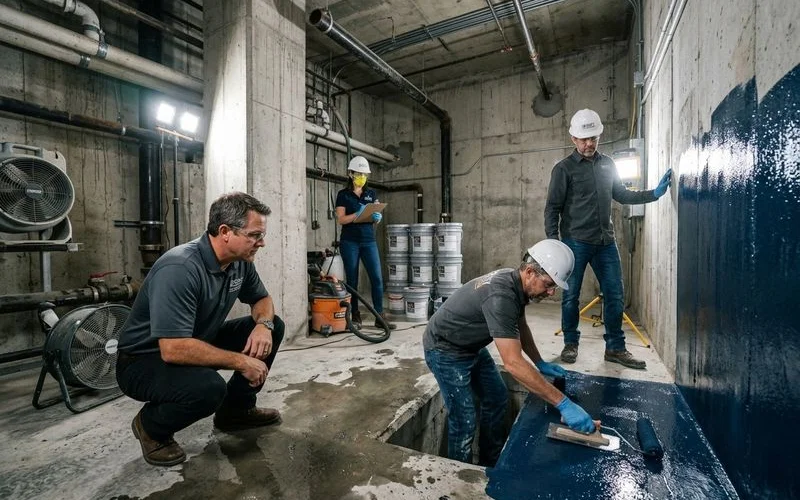
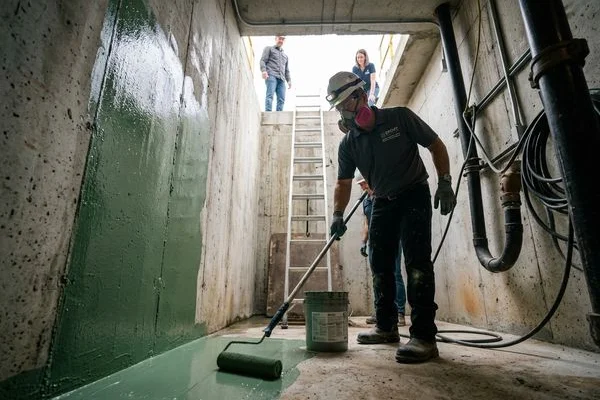
Grand Rapids’ high water table and seasonal ground moisture create hydrostatic pressure challenges for underground vaults, sumps, and pump pits. We apply waterproofing systems including crystalline waterproofing for active infiltration, positive-side membranes for new construction, and interior coating systems for existing below-grade structures.
SPCC Compliance Documentation for Grand Rapids Facilities
For regulated facilities, our containment projects include documentation structured for SPCC plan compliance: written specifications with chemical resistance rationale, surface preparation records, application records, film thickness measurements, and holiday test reports per NACE SP0188.
Contact our containment coating specialists to discuss your chemical exposure profile and receive a technically appropriate lining specification for your Grand Rapids area containment or tank project.
What's Included
Our Containment & Tank Installation Process
Chemical Exposure Analysis
We begin every containment and tank coating project by obtaining the complete list of chemicals stored or handled in the containment area — including CAS numbers, concentrations, temperatures, and exposure duration scenarios. We cross-reference this list against the chemical resistance data for multiple coating system options before recommending a specification. The wrong coating chemistry will fail rapidly and potentially create a more serious release scenario than an uncoated substrate.
Substrate Investigation and Defect Mapping
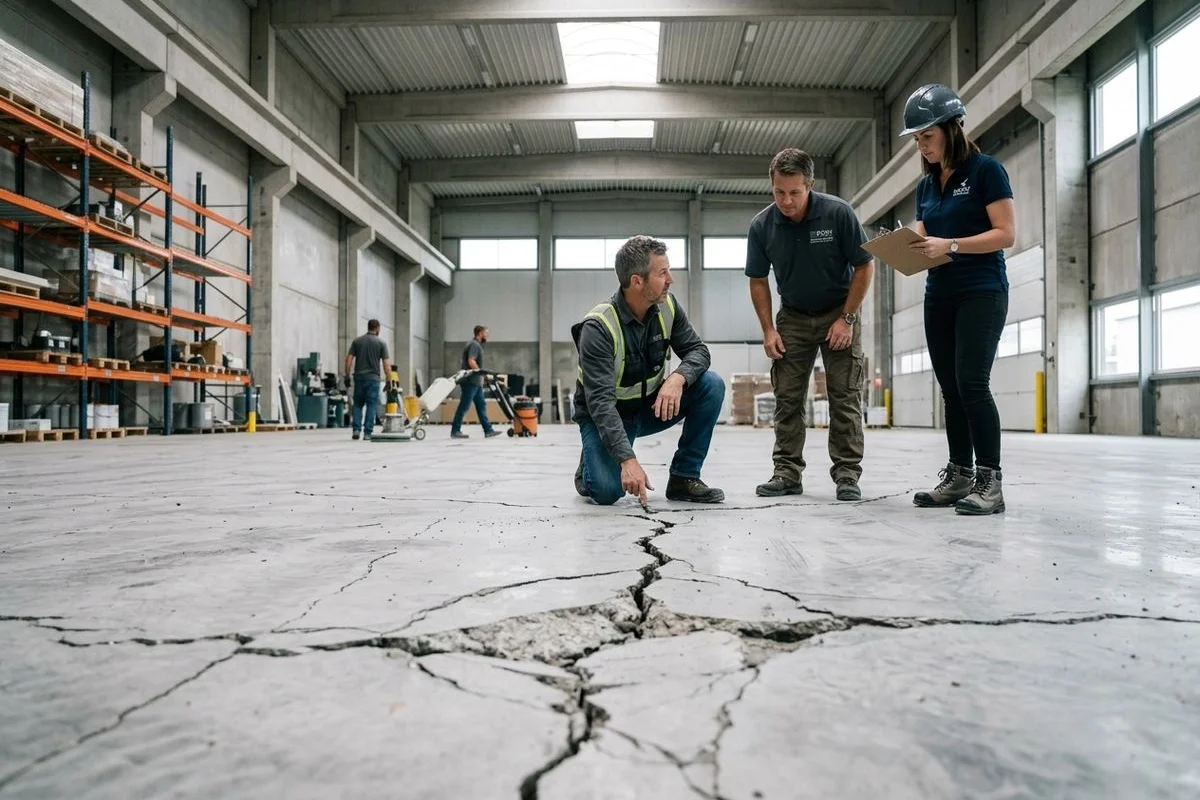
Containment structures and tank interiors are inspected for cracks, spalls, honeycombing, construction joints, penetrations, and existing coating failure. All defects are mapped and photographed. Moisture testing is performed — containment structures are often in contact with groundwater or subjected to hydrostatic pressure that must be addressed in the specification. Any active leaks are treated before coating proceeds.
Surface Preparation to SSPC Standards
Concrete containment surfaces are prepared by shot blasting, grinding, or high-pressure water jetting to achieve ICRI CSP 4–6 for thick coating systems. Steel surfaces are abrasive blasted to SSPC-SP 10 (Near-White Metal) or SSPC-SP 5 (White Metal) for immersion service. All joint details, penetrations, and transitions receive specific preparation treatment. Anchor profile is measured and documented before coating proceeds.
Repair and Crack Bridging
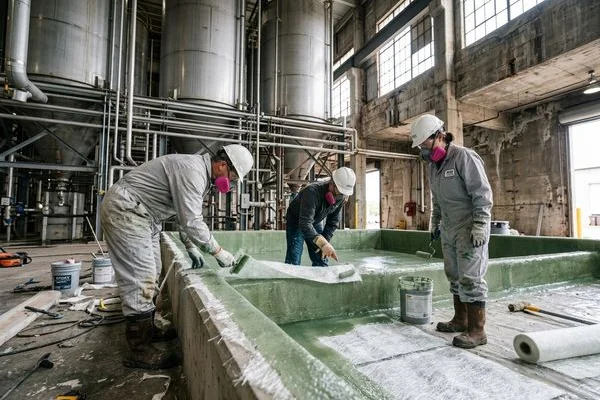
All cracks, construction joints, and penetration details are treated before the primary coating is applied. Positive-side waterproofing mortars seal active leaks. Structural cracks receive repair treatment appropriate to the movement classification. Penetrations are fitted with appropriate collars and flashing materials. Fiberglass mat reinforcement is embedded over all joints and transition details to provide bridging capacity in the primary coating system.
Primary Coating System Application
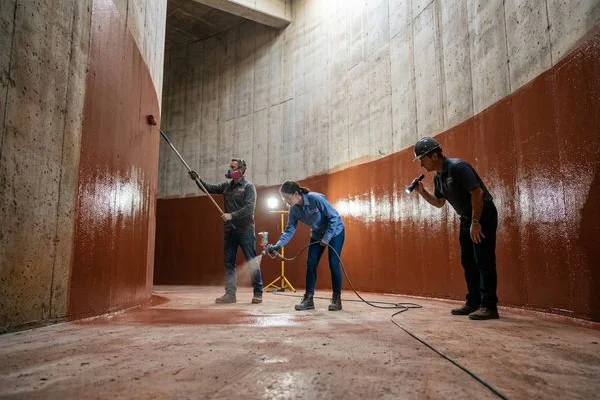
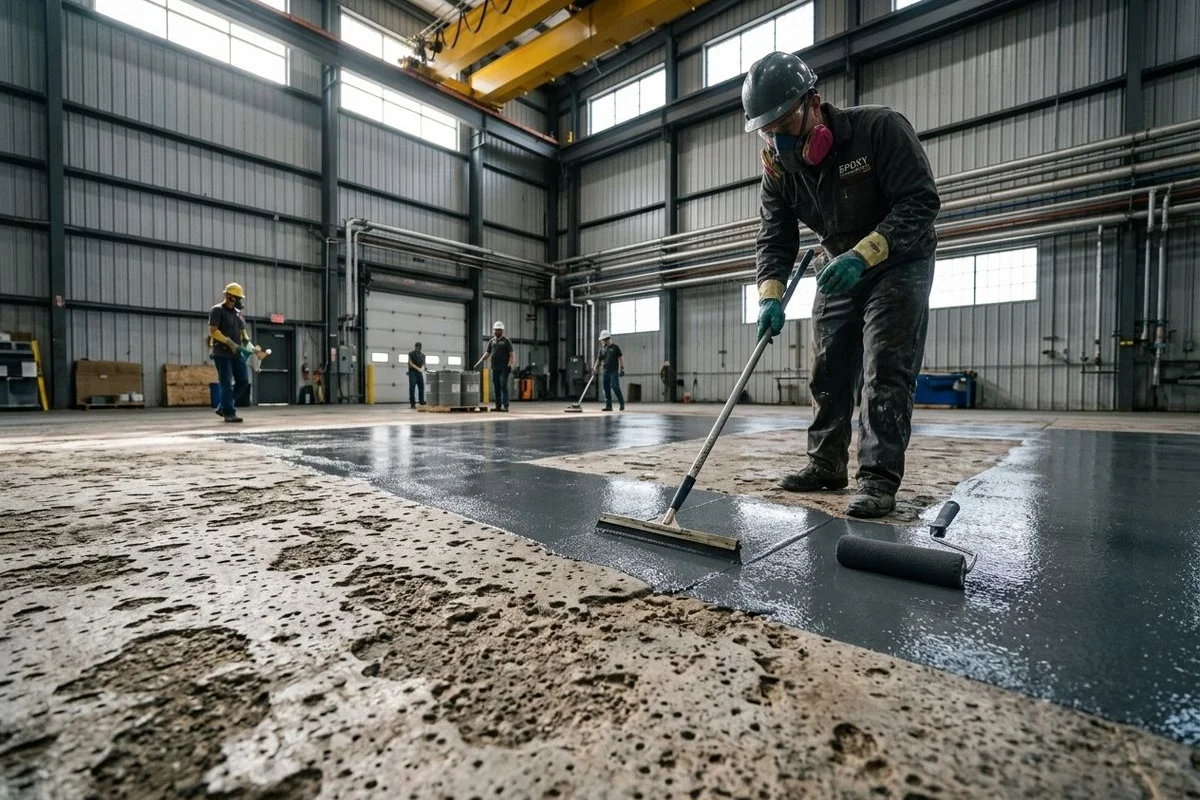
The specified coating system — novolac epoxy, vinyl ester, or standard epoxy depending on chemical exposure requirements — is applied in multiple coats to achieve the specified total dry film thickness (typically 40–120 mils DFT for primary containment applications). Each coat is inspected for defects before the subsequent coat is applied. Film thickness is measured at defined intervals throughout application.
Holiday Testing and Acceptance
Completed coating systems on containment structures and tank interiors are subjected to holiday (spark) testing per NACE SP0188 to identify pinholes or voids that would compromise the containment integrity. Any holidays detected are repaired and retested. A written test report documenting all test locations and results is provided. Water flood testing of containment berms is available as final verification.
Why Choose Epoxy Flooring Pro
Chemical Resistance Expertise
Selecting the correct coating chemistry for containment is a technical decision requiring actual knowledge of polymer chemistry. We have application experience with all major containment coating types.
NACE-Informed Application Standards
Our containment work follows NACE (AMPP) surface preparation and application standards — the recognized authority for industrial corrosion protection coatings.
Detail Work is Our Strength
Containment failures almost always occur at joints, penetrations, and transitions. Our crews are specifically trained on these high-risk details.
Holiday Testing on Every Project
We perform holiday testing on every containment application as standard procedure. A single pinhole allows chemical penetration to the substrate.
SPCC Compliance Documentation
We provide complete documentation — surface prep records, coating lot numbers, film thickness measurements, and holiday test results — for your EPA SPCC plan records.
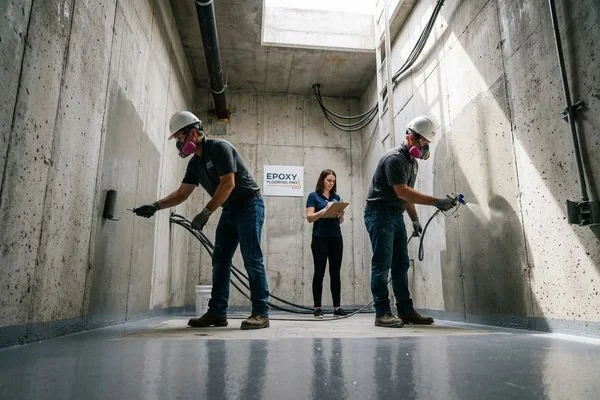
Project Gallery
What Our Clients Say
"We needed to reline chemical storage berms at our Grand Rapids manufacturing facility after sulfuric acid exposure caused coating failure. Epoxy Flooring Pro specified novolac epoxy rather than the standard epoxy the previous contractor had used. The new lining has been in perfect service for 18 months and passed our SPCC inspection."
"Our underground utility vault in Kentwood was leaking groundwater through concrete cracks. They treated the active leaks, installed crack bridging, and applied a full waterproofing system. The vault has been dry for eight months. Excellent documentation for our engineering records."
"Holiday testing after the first coat revealed 12 pinholes at our Walker facility. Every one was repaired and retested. That quality control matters on chemical containment. We trust this floor to contain whatever gets spilled on it."
Frequently Asked Questions
What is the difference between novolac epoxy and standard epoxy for Grand Rapids containment applications?
How thick should containment coatings be for West Michigan chemical facilities?
Can cracked concrete containment structures be coated?
What is holiday testing and is it required?
Get a Free Estimate for Containment & Tank
Our project managers are ready to assess your facility and recommend the optimal containment & tank solution.